5 Şubat 2013 Salı

Ribs by Harold McGee

To contact us Click HERE

The Curious Cook - Leave the Barbecued Ribs to the Professionals - NYTimes.com


EVERYONE knows the barbecue mantra "low and slow:" cook tough cuts of meat over low indirect heat for hours and hours until they fall off the bone and melt in the mouth.To be precise, don't cook ribs for more than a couple of people on a standard-size domestic grill.It takes about five pounds of ribs to feed four people generously. That turns out to be a couple hundred square inches of ribs.My starter-model gas grill is about 275 square inches, with heating elements running along the long sides. Ribs for four cover most of the grill surface, and some of them lie directly over the heating element.Ribs for four cover more than half its area, so that some of the meat ends up within a few inches of the coals.Meanwhile, the bottom surface of the meat is exposed to hotter air, and on a crowded grill, parts are exposed to the direct heat of the flames or coals. So even if we follow the recipe exactly and the grill thermometer never rises above 200 degrees, some of the meat is being cooked at a much higher temperature and will dry out and toughen.On a gas grill, where the heating elements are fixed in place right under the cooking surface, the only practical solution is to turn on the heat on one half of the grill, and cook only as much meat as will fit on the other side. It's deeper, so you can keep the coals farther from the cooking surface, and protect the meat from their direct heat by propping up a foil heat shield.It's much easier to barbecue well in a smoker, a kind of cooker that's specifically designed to provide low indirect heat, or on a large grill that can keep all the meat a good eight inches or more from the heat. But because I barbecue only occasionally and don't plan to upgrade my basic grills anytime soon, I've settled on a hybrid approach to ribs. I cook them low and slow in the oven and then give them a brief finishing hit of high heat or smoke on the grill.There's nothing new about cooking ribs in the oven, but here, too, recipes are often short on details that make a difference.We cook ribs and other typical barbecue cuts at a low temperature to conserve as much of the meat's moisture as possible, and we cook them for hours to dissolve their tough connective tissue into succulent gelatin.You can get very juicy ribs by cooking them at 135 degrees, but making them tender takes two or three days. At 160 degrees, you get tender ribs in 10 to 12 hours. At 170 to 180 degrees, the meat is noticeably dryer, but the cooking time is a more manageable 6 to 8 hours.I start cooking ribs in the oven at around 200 degrees if they're wrapped in foil, and unwrapped ribs at 225 degrees to compensate for the cooling effect of evaporation from the exposed meat surface.I season the meat simply.Of course, barbecuing for company is about much more than the meat. The kitchen can't match the outdoors for celebrating the pleasures of summer, and dry ribs can still be tasty. But to get the best from your grill, study it and see how much meat it can actually heat gently and evenly.Then when you sit down and it's the meat that matters, see which ribs disappear first.
full article by Harold McGee  http://www.nytimes.com/2010/06/30/dining/30curious.html?ref=dining&_r=0

3 Ocak 2013 Perşembe

Old Milwaukee Rye Bread

To contact us Click HERE

     I was introducedto this bread by Rethie Foster when I interviewed her for my February 2002cooking column for the Abilene Reflector-Chronicle. Here’s what I said in therecipe header, “Thisis a somewhat complicated recipe but well worth the effort!  It belongs in the 'sourdough' category andbegins with an old-fashioned sponge starter. Rethie discovered this bread inthe newspaper and it became a favorite.”     She was just thefifth cook that I had inteviewed and she shared wonderful recipes. As a matterof fact, her collection of recipes is still available in the first edition ofthe Heritage Society’s Home Cooking, Dickinson Country Style. 
Old Milwaukee Rye Bread   Yield:  4 loavesSponge for RyeBread -- prepare this inadvance to use in the recipe that follows1 (¼ oz.) pkg. activedry yeast yeast (or 1 scant tablespoon)1½ cups warm water 2 cups rye flour1 teaspoon carawayseed  (Iomit)
1.     Combine the yeast and water in a largebowl. 2.     Stir to dissolve.  Add the flour and caraway seeds and stir toblend.  3.     Cover lightly with plastic wrap.
This is what the starter looks like.
Although the spongeis usable after six hours, it is best left to stand from one to three days atroom temperature. Three days will give a more sour taste, which many peopleprefer.
Rye Bread1  recipe sponge for rye bread (above)1  (¼ oz.)pkg. active dry yeast yeast (or 1scant tablespoon)1  cup warm water (about 105° to 115°)¼  cup all-natural dark molasses2 tablespoons carawayseeds, divided (I just use enough tosprinkle on top of the loaves right before baking)1 lightly beaten egg1  tablespoon salt1 cup rye flour3  tablespoons solid white shorteningAbout 5 to 5½ cupsall-purpose flour*1 beaten egg and 1tablespoon milk for brushing top of loaves
1.     Stir down the sponge. 2.     Dissolve yeast in the water.
The development of bubbles in the yeast mixture indicates that is has been activated.
3.      Add the yeast to the sponge, stirring.  4.     Add the molasses and half the carawayseeds. Stir to blend.  5.     Add the lightly beaten egg and salt andblend once more.  Add the rye flour andblend.6.     Add the shortening and beat toblend. 

7.     Add 2 cups of all-purpose flour and blendwith a wooden spoon. (Or, mix with thepaddle attachment of a counter-style mixer.)8.     Gradually add 2 more cups, kneadingconstantly. (I continue to use the paddleattachment of the mixer during this step.)

9.     Add more flour, about 2 tablespoons at atime, until the dough has a proper pliable and workable consistency (it shouldlose it’s stickiness but not be dry). Turn the dough out onto a lightly flouredboard and continue kneading about 6 minutes or longer. Knead and beat doughabout 10 minutes. When ready, dough should weigh about 3½ pounds. (I insert the kneading attachment rightbefore beginning this step.)
The kneaded dough has pulled away from the sides of the bowl .
10.  Let warm water flow into a large bowluntil bowl is heated. Drain, dry and grease the bowl with shortening (or drizzle bowl lightly with vegetableoil).  Shape the dough into a balland add it to the bowl. Cover lightly with plastic wrap.  et aside to let rise one hour or until doublein bulk. (Note:  To test for double insize . . . Press the tips of 2 fingers lightly and quickly 1/2” into the dough;if the dent stays, it is double.)
Kneaded dough has just  been added to the bowl.
This is what is looks like after an hour!
11.  If long bread tins or molds (such asFrench bread molds) are to be used, grease them (or spray).  Otherwise, use aTeflon baking sheet, ungreased.12.  Divide the dough into four parts of equalweight. Roll each piece into a long sausage shape with the palms of the hand. Theshapes should be about 15 or 16 inches long. Place in molds, or on baking sheet, and cover loosely with wax paper andset aside to rise about an hour or until double in bulk. 
Loaves have just been added to the bread pans.
13.  Meanwhile, preheat the oven to 375°.  14.  Using a sharp blade, make severaldiagonal gashes on top of each loaf. Brush tops with egg beaten with milk. Sprinkle with remaining caraway seeds. 
Slashing the raised dough helps control splitting during the baking process.
15.  Place in the oven and bake about 40minutes or until crisp crusted and baked through.  (Note: When the baking time is up, remove oneloaf and tap the bottom or sides; if done, it should sound hollow.)

*Flour amounts varydue to weather conditions. In very humid weather, yeast recipes often requiremore flour because the extra moisture in the air keeps the dough soft. Theprotein content of the flour can cause variables.
Recipe without photos:Old Milwaukee Rye Bread   Yield:  4 loavesSponge for RyeBread -- prepare this inadvance to use in the recipe that follows1 (¼ oz.) pkg. activedry yeast yeast (or 1 scant tablespoon)1½ cups warm water 2 cups rye flour1 teaspoon carawayseed  (Iomit)
1.     Combine the yeast and water in a largebowl. 2.     Stir to dissolve.  Add the flour and caraway seeds and stir toblend.  3.     Cover lightly with plastic wrap.Although the spongeis usable after six hours, it is best left to stand from one to three days atroom temperature. Three days will give a more sour taste, which many peopleprefer.
Rye Bread1  recipe sponge for rye bread (above)1  (¼ oz.)pkg. active dry yeast yeast (or 1scant tablespoon)1  cup warm water (about 105° to 115°)¼  cup all-natural dark molasses2 tablespoons carawayseeds, divided (I just use enough tosprinkle on top of the loaves right before baking)1 lightly beaten egg1  tablespoon salt1 cup rye flour3  tablespoons solid white shorteningAbout 5 to 5½ cupsall-purpose flour*1 beaten egg and 1tablespoon milk for brushing top of loaves
1.     Stir down the sponge. 2.     Dissolve yeast in the water. 3.      Add the yeast to the sponge, stirring.  4.     Add the molasses and half the carawayseeds. Stir to blend.  5.     Add the lightly beaten egg and salt andblend once more.  Add the rye flour andblend.6.     Add the shortening and beat toblend.  7.     Add 2 cups of all-purpose flour and blendwith a wooden spoon. (Or, mix with thepaddle attachment of a counter-style mixer.)8.     Gradually add 2 more cups, kneadingconstantly. (I continue to use the paddleattachment of the mixer during this step.)9.     Add more flour, about 2 tablespoons at atime, until the dough has a proper pliable and workable consistency (it shouldlose it’s stickiness but not be dry). Turn the dough out onto a lightly flouredboard and continue kneading about 6 minutes or longer. Knead and beat doughabout 10 minutes. When ready, dough should weigh about 3½ pounds. (I insert the kneading attachment rightbefore beginning this step.)10.  Let warm water flow into a large bowluntil bowl is heated. Drain, dry and grease the bowl with shortening (or drizzle bowl lightly with vegetableoil).  Shape the dough into a balland add it to the bowl. Cover lightly with plastic wrap.  et aside to let rise one hour or until doublein bulk. (Note:  To test for double insize . . . Press the tips of 2 fingers lightly and quickly 1/2” into the dough;if the dent stays, it is double.)11.  If long bread tins or molds (such asFrench bread molds) are to be used, grease them (or spray).  Otherwise, use aTeflon baking sheet, ungreased.12.  Divide the dough into four parts of equalweight. Roll each piece into a long sausage shape with the palms of the hand. Theshapes should be about 15 or 16 inches long. Place in molds, or on baking sheet, and cover loosely with wax paper andset aside to rise about an hour or until double in bulk.  13.  Meanwhile, preheat the oven to 375°.  14.  Using a sharp blade, make severaldiagonal gashes on top of each loaf. Brush tops with egg beaten with milk. Sprinkle with remaining caraway seeds. 15.  Place in the oven and bake about 40minutes or until crisp crusted and baked through.  (Note: When the baking time is up, remove oneloaf and tap the bottom or sides; if done, it should sound hollow.)
*Flour amounts varydue to weather conditions. In very humid weather, yeast recipes often requiremore flour because the extra moisture in the air keeps the dough soft. Theprotein content of the flour can cause variables.

Cinnamon Popcorn — Gifts From the Kitchen

To contact us Click HERE

    The elves have been busy making Christmaspopcorn . . . or maybe it was a few of the nutcrackers that seem to invade our house each holiday season. Nevertheless, sacks of cinnamon popcorn are now ready for delivery. And, the little helpers even attachedrecipes to the sacks! Just wished that they had washed the dishes when theywere through!     The recipe comes from Betty Krenger. It,along with lots of her other wonderful recipes, are included in the 3rdedition (2003-04) of the Heritage Society’s HomeCooking, Dickinson County Style.     I just can't help it! Every time I make candy I am reminded of the food science class I used to teach. For example . . . the corn syrup and baking soda act as interfering agents in this recipe. Corn syrup is high in glucose which helps form small crystals in the final candy solution. Cream of tartar is an acid which can cause the hydrolysis of sucrose creating glucose and fructose (the resulting simple sugars also help form small crystals that create a better mouthfeel). Also the combination of the cream of tartar (acid) and baking soda (base) create the chemical foaming action that changes the cinnamon syrup right before it is poured over the popcorn.  End of lesson . . . for now!
Cinnamon Popcorn  Yield: 4 quarts                      1 cup brown sugar (packed)1/2 to 3/4 cup red hot candies (such as Cinnamon Imperials®) (I use 3/4 cup)1 stick butter (1/2 cup)1/4 cup white corn syrup1/2 teaspoon salt1/2 teaspoon baking soda1/8 teaspoon cream of tartar4 quarts popped corn
1.     Putthe brown sugar, red hots, butter and corn syrup in a microwave safe bowl; cookfor 4 minutes, stirring after each minute. Cook an additional 2 minutes morewithout stirring. Stir in the salt, soda and cream of tartar.
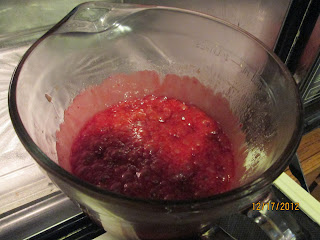
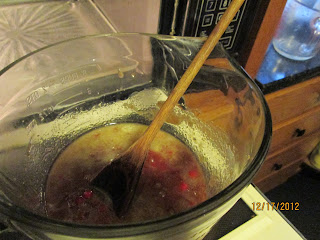
This is what the mixture looks like after the first 2 minutes in the microwave.
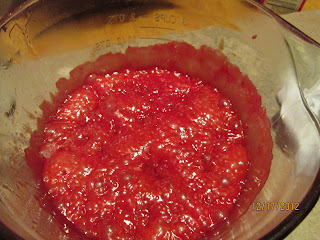
This is what it looks like at the end of the first 4 minutes. 
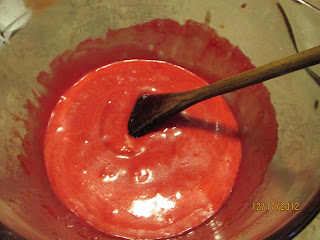
And, this is what it looks like after the last 2 minutes in the microwave.
After the salt, baking soda and cream of tartar go in, the mixture lightens and becomes slightly foamy.
2.     Putpopcorn in a double brown grocery-type bag. Pour hot mixture over corn, stirand then shake well. Put bag in microwave and cook 1-1/2 minutes; remove andshake well. Microwave another 1-1/2 minutes and shake
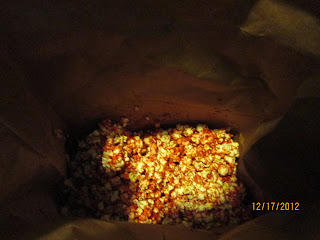
Popcorn is in the sack after the initial stirring and shaking . . .  ready to go through the
final microwaving process.
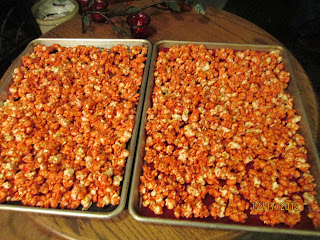
3.     Spreadon a cookie sheets to dry. 
4.     Whendry, store in an air-tight container or bag. 

Recipe without photos . . . Cinnamon Popcorn  Yield: 4 quarts                      1 cup brown sugar (packed)1/2 - 3/4 cup red hot candies (such as Cinnamon Imperials®)1 stick butter (1/2 cup)1/4 cup white corn syrup1/2 teaspoon salt1/2 teaspoon baking soda1/8 teaspoon cream of tartar4 quarts popped corn
1.     Putthe brown sugar, red hots, butter and corn syrup in a microwave safe bowl; cookfor 4 minutes, stirring after each minute. Cook an additional 2 minutes morewithout stirring. Stir in the salt, soda and cream of tartar.2.     Putpopcorn in a double brown grocery-type bag. Pour hot mixture over corn, stirand then shake well. Put bag in microwave and cook 1-1/2 minutes; remove andshake well. Microwave another 1-1/2 minutes and shake3.     Spreadon a cookie sheets to dry.  4.     Whendry, store in an air-tight container or bag.